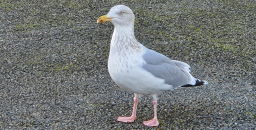
Two days ringing on the United Utilities areas of Bowland Fells resulted in 326 gulls being ringed on 8th and 9th July 2026. Reports from United Utilities and RSPB indicated that there were good numbers of fledglings at Brennand Fells, and as a result the team headed there first. Despite there being a lot of juveniles that had already fledged, we managed to ring a good sample of 232 birds - 217 Lesser Black-backed Gulls, 10 Herring Gulls, 3 potential lesser/herring hybrids, and 2 Great Black-backed Gulls.
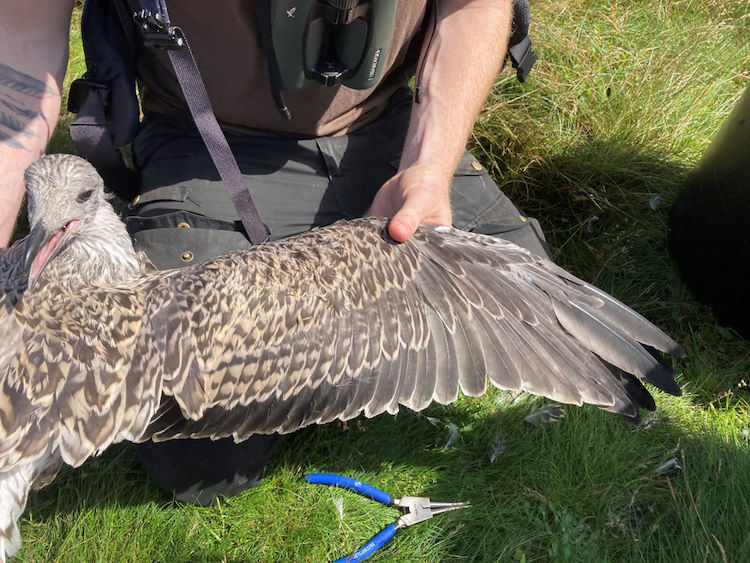 A potential Lesser Black-backed/Herring Gull hybrid. Dark Lesser type primaries with Herring Gull type greater coverts
Overall the Brennand Fell colony looked healthy with a large proportion of juveniles already fledged. However, in some parts of the colony groups of several large dead chicks were found.
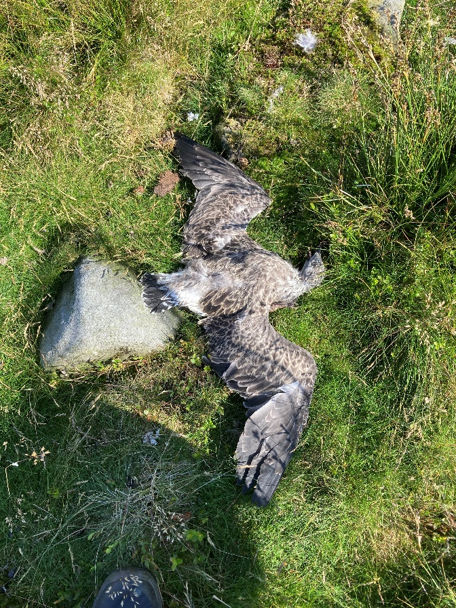 Recently dead chicks on Brennand Fell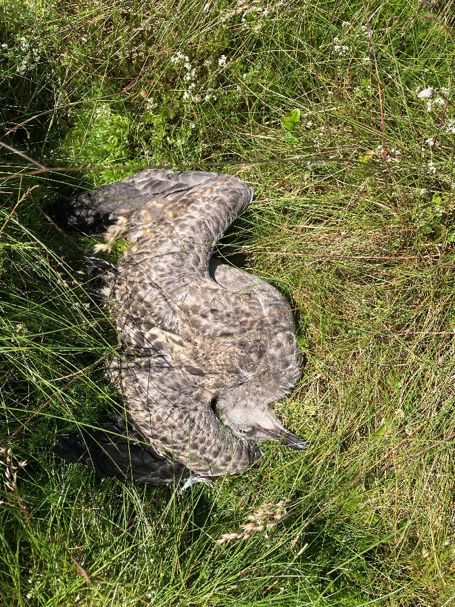
On 9th July a team of 6 headed up to Langden Head colony, and similar to last year productivity was poor compared to 2024 and previous years. A total of 92 gulls were ringed, although this was a result of covering the entire colony. In 2024 around 300 chicks were ringed in a much smaller area, and a further c.250 gulls being ringed two days later.
Overall, there were clearly significantly fewer gulls at Langden Head compared to recent years. The other unusual thing was the presence of nests with eggs and small chicks. This suggests the colony had been disturbed and birds re-laid. It was noted that in the sub colony just above High Raven Scar below the main Langden Head colony, over 300 gulls were present in May 2026. However, on 9th July there was no sign of any gulls. There were also unusually high numbers of dead chicks, often in groups.
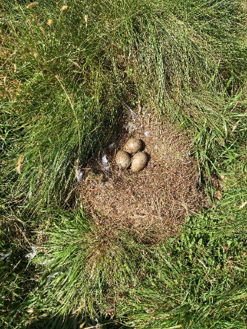 Nest with eggs at Langden Head
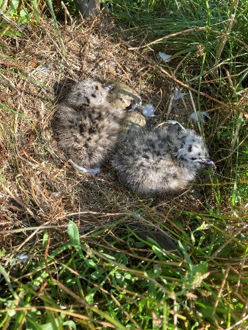 Recently hatched chicks at Langden Head
A visit by Pete Wilson to the colony in June appeared to indicate some evidence of predation, and the gulls seemed to have shifted/ partially vacated some areas. There was evidence of predation during the ringing visit on 9th July, including recently dead chicks including a group of recently dead chicks and dying chick that may have been due to fox predation.
Dr Alice Risely (University of Salford) collected cloacal swabs and blood samples to analyse gull nutrition and health. A total of 167 paired blood and swab samples - 118 samples from Lesser Black-backed Gulls, 47 from Herring Gulls, and 2 from Great Black-backed Gulls across the various colonies, including 45 of those from Langden Head on 9th July.
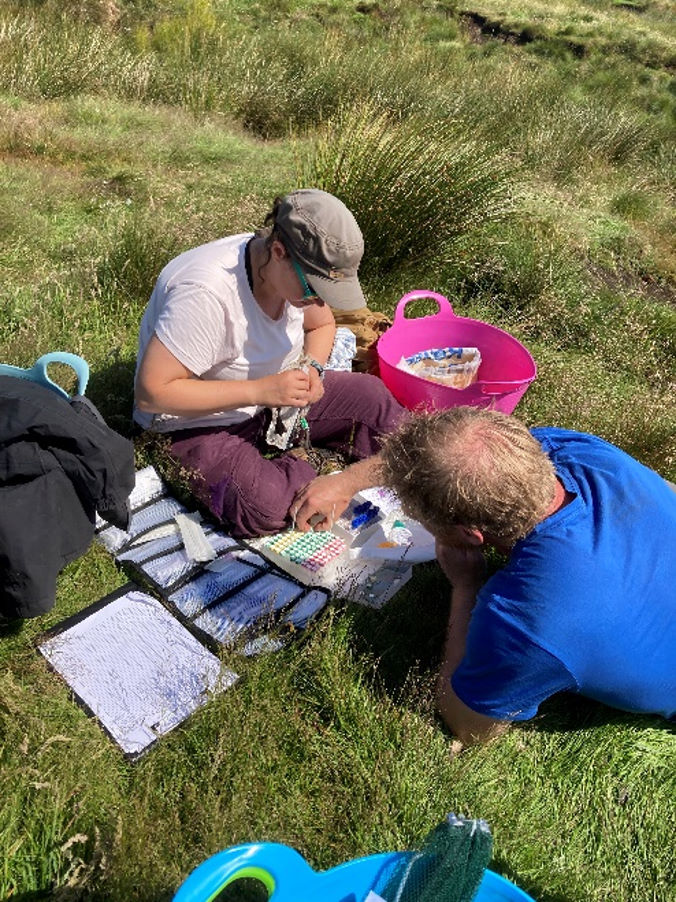 Alice and Wes processing samples
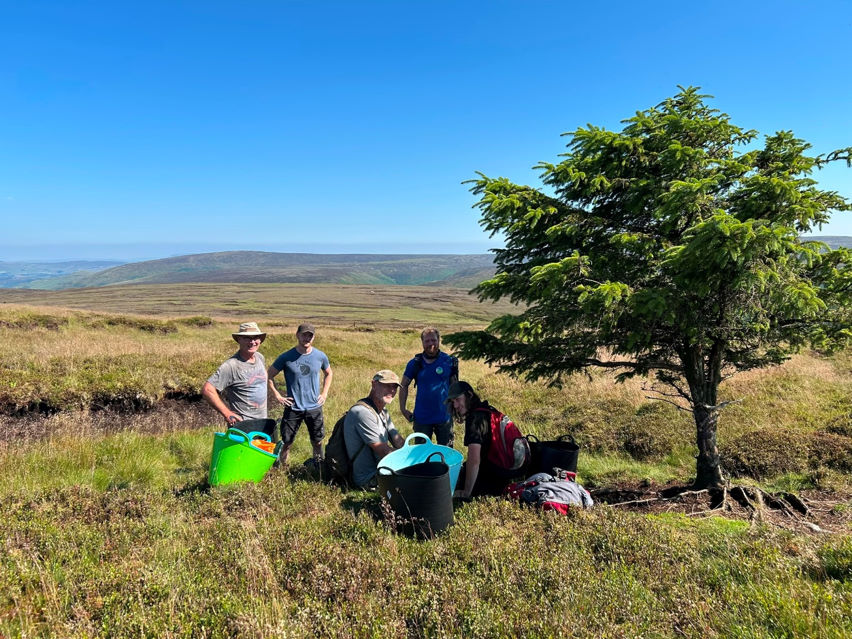 The team on Langden Head on 9th July on way home taking advantage of the only tree for miles! © Alice Risely
